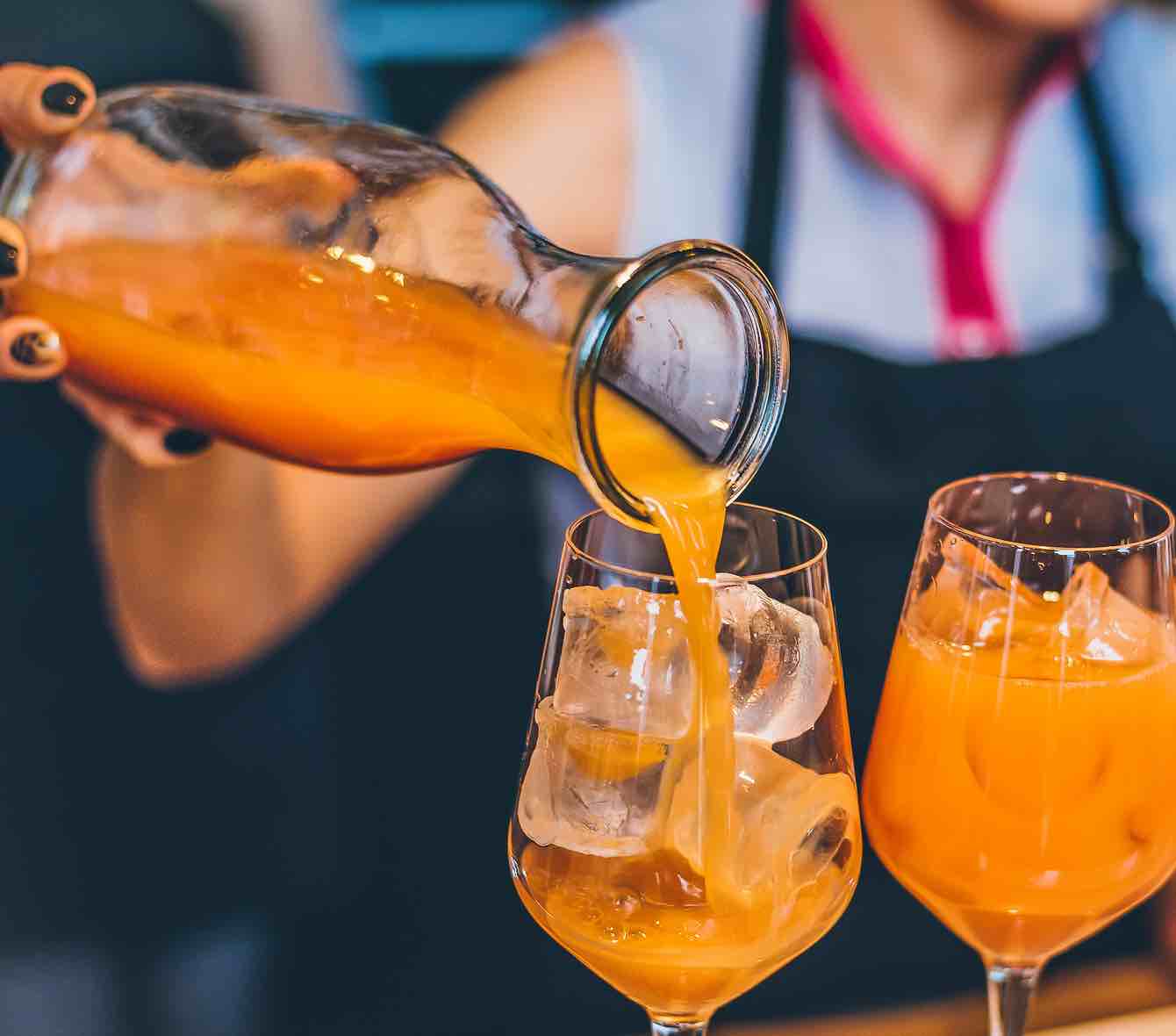

With summer approaching, I've noticed a strong demand for preparing large batches of punch-style cocktails for 10, 20, and sometimes even 50 people! You're truly crazy...
Since it's not always easy to convert recipes written in glass measurements into quantities sufficient to fill a large salad bowl, I've decided to create a full series of punch recipes for you.
And we start with what we simply call in France (metropolitan France, Caribbean, Réunion, Guyana, etc.) the punch.
What punch are we talking about?
It's important to know that the word 'punch' has many different meanings. Here, I'm referring to the traditional punch, made with rum and fruit juice. In English, this word refers to slightly different recipes (in French), and more in the world of cocktails (in French).
Being from Réunion, I'll give you the recipe my family uses, and especially some tips to adapt it to your own style. In fact, it would be impossible to get two Reunionnais to agree on the punch recipe, so I certainly won't claim that my version will satisfy Antilleans or Guianese tastes.
The most important thing, as usual, is to understand the structure and the relationship between the quantities. After that, if you prefer Martinique rum, Réunion rum, etc., that's up to you. If you'd like it with passion fruit, guava, or simply orange, the same applies!
Enough talking: let us see how to make punch for 10 people. The multiplier on the page lets you multiply the quantities by 2 or 3 to get the amounts for 20 and 30 people.
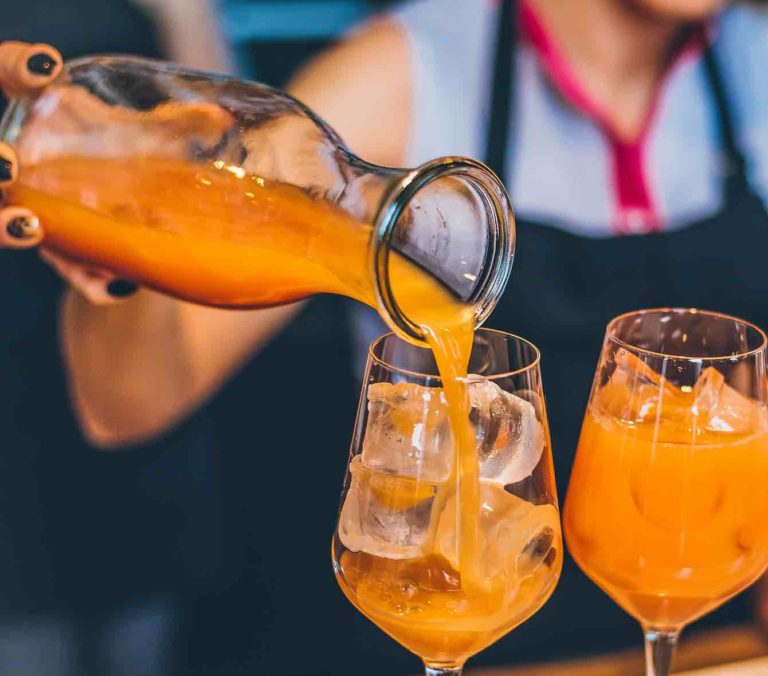
Easy rum punch for a crowd

Ingredients
- ½ bottle (1L) white rum
- 15 cl simple syrup Canadou!
- 0.5 L orange juice
- 0.5 L pineapple juice
- 0.5 L another tropical fruit juice guava, passion fruit, or a little more pineapple if you like it
- 1 kg ice cubes
- chopped fruit optional: pineapple, lemons, orange …
- cinnamon stick optional
- vanilla pod optional
Equipment
- Large mixing bowl
- Ladle
Instructions
Before the guests arrive
- Add all the ingredients to a large mixing bowl.
- Stir with a punch ladle until everything is well mixed.
- Refrigerate the punch. The earlier you prepare it, the better, but allow at least an hour.
When the guests arrive
- Add the ice to the bowl.
- Serve with the punch ladle, distributing the punch, ice cubes and fruit evenly.
- Enjoy!
Notes
The punch, a popular cocktail
Some cocktails were born in the prestigious bars of grand hotels. Others, like punch, have more popular origins.
That's why there's no classic punch recipe: the ingredients are inexpensive, the homemade preparation is simple, and everyone can adapt it to their taste. Once you understand the relationship between rum and fruit juices, and how to adjust the final result by adding a little simple syrup or a little more rum to achieve the desired effect, anyone can create their own punch recipe!
Of course, on this blog, I'll encourage you to present it properly, in a beautiful salad bowl, with a nicely garnished glass. But my father would simply pour it directly into the fruit juice bottles he had just emptied, and serve it straight into a rocks glass. For this kind of cocktail, it's the conviviality that matters more than the execution.
What is punch? Origins and history
Contrary to what people often believe, punch was not born in the Caribbean but in India. The name comes from the Hindi word panch, 'five', because the first punches were made with five ingredients :
- An alcoholic spirit (at the time of arrack, palm or rice alcohol)
- Water (or tea)
- Sugar
- Something sour (the sour, typically lemon juice)
- Spices (cinnamon, ginger, etc.)
The first written mention dates back to 1632, in a letter between two employees of the East India Company. The British stationed in India had only arrack available, which had a strength of around 40°: too strong to drink straight under the Indian heat, and socially frowned upon. By diluting and sweetening it, they produced a drink at 16–17°, the strength of wine, balanced between sweetness and acidity, and much cheaper than imported wine.
The rule of five ingredients has long since been forgotten, but the secret to a successful punch hasn't changed: it's the balance between acidity, sugar, alcohol, and water. Spices are just a bonus.
Original punch (India): arrack + water/tea + sugar + lime + spices
Plant punch (Caribbean) : rum + tropical fruit juice + syrup + spices
Planteur is the Caribbean cousin of Indian punch, adapted to local ingredients (rum, pineapple, mango). Same family, different terroir. Brought to England by East India Company sailors, punch enjoyed its golden age from the mid-17th century to the early 19th century, before cocktails took over. This is also the structure followed by the Fish House Punch (in French), created in 1732 in the oldest social club in America.
On that topic, the reference remains the book by David Wondrich. If you read English, I highly recommend it without reservation.
When to prepare a punch and how to store it
This is by far the most frequently asked question: at what point should you start preparing it, and what it becomes once the evening is over.
Can you prepare the punch the day before?
Yes, and it's even recommended. Marinating fruits, syrup, and alcohol overnight greatly enhances the flavors. Prepare everything except the ice and carbonated elements (tonic, champagne), which you'll add just before serving. Store in a sealed container in the refrigerator.
How long can a punch be stored?
In the fridge, a punch can only last 2 to 3 days at most. Beyond that, the fruits start to ferment and the taste deteriorates. If you have leftover punch, remove the fruits and keep only the liquid. Conversely, a punch left overnight on the table at room temperature should be discarded.
Can we transport the punch in a plastic bottle?
Yes, and that's actually the most practical way to take it to someone's place. Prepare the punch without ice or fruit, pour it into clean plastic bottles filled to the brim (less air, less oxidation), and keep them refrigerated during the journey. On arrival, pour the bottles into a serving bowl, add the fruit, ice, and any optional carbonated ingredients. My father used to prepare the punch directly in the fruit juice bottles he had just emptied—this works very well.
How to keep the punch fresh throughout the evening?
The secret is using a large amount of ice, and you should never cut corners. If the punch is being served outdoors in summer, place the salad bowl into a larger container filled with ice. And always keep a reserve in the fridge for refilling.
Alcohol, sugar and fruits: the right proportions
What is the ideal alcohol strength for a punch?
Between 14 and 17%, roughly the strength of wine. This is the historical balance point: enough alcohol to give the punch character, but not so much that two glasses would knock people out. With the proportions of this recipe (one 70 cl bottle for a total of 2 liters of punch), you're in that range. If you'd like to verify your own version, I've detailed the method in how to calculate the alcohol content of a cocktail.
Which fruits to add to a punch?
For a Caribbean punch: pineapple, mango, passion fruit, orange and lime. For a more classic punch: orange, lemon, apple and cinnamon. The golden rule is to cut the fruit into pieces large enough not to fall apart, and add it at least 2 hours before serving to let it macerate.
How many punch glasses per person to prepare?
Plan for 2 to 3 glasses per person for an aperitif (about 30–35 cl), and 4 to 5 glasses for a full evening (about 60 cl). In practice, always add 20% extra to your estimate: there's always someone who drinks more than expected.
Can I substitute sugar with honey or agave syrup?
Yes, but keep in mind that honey brings its own flavor, sometimes quite strong, and that agave syrup sweetens more than equal-weight sugar. With honey, reduce the amount by about 20% and choose a mild honey (acacia). The homemade sugar syrup remains the most neutral option and dissolves instantly.
Can bottled lemon juice be used?
As a fixer, yes. But for a memorable punch, no. Fresh lime juice has a sharper acidity and more complex aromas than bottled juice, which is often flat and metallic. And most importantly, without whole limes, you don't get the zest.
FAQ: your other questions about the punch
If your question isn't listed, feel free to post it in the comments.
Can you make a punch without alcohol?
Absolutely. Replace the spirit with a strong, well-brewed black tea for complexity and a subtle bitterness, or with a mix of red wine juice and tonic. The ratio stays the same: you balance sweetness and acidity. I've detailed the full version in alcohol-free punch for 20 or 30 people.
Should rum blanc or rum amber be used?
White rum gives a fresher, more neutral punch, letting the fruits shine. Amber rum brings notes of vanilla, caramel, and wood that warm the drink. For a fruity summer punch, go with white; for a spicy winter punch or a holiday punch, amber is king. And there's no reason you can't mix both— in fact, blending them is a historical technique in the tiki world.
How do you measure the punch when you don't know the exact number of guests?
Prepare the amount needed and keep extra on hand for a second batch. It's always better to make fresh punch during the evening than to discard 10 liters of lukewarm punch the next day. With the proportions of this recipe, it takes just 5 minutes to assemble a new batch.
Should punch be filtered before serving?
It depends on the style you're aiming for. A punch with floating fruit pieces looks nice and is very convivial. But for a wedding, for example, a filtered punch served in a beautiful glass fountain is more elegant visually: in that case, macerate the fruits for 4 to 6 hours, then filter before transferring to the serving container. Otherwise, have straws on hand.
How much does a punch cost for 20 people?
With a budget-friendly rum (Charrette, Trois Rivières), expect 25 to 35 euros for 4 liters of punch serving 20 people. With a mid-range rum (Clément, Isautier), 40 to 55 euros. With a Savanna Lontan or a Depaz, 60 to 80 euros. In all cases, it's still significantly cheaper than serving wine or beer for the same number of people.
Is the punch dangerous because we don't taste the alcohol?
This is the classic trap of a punch, and the question is legitimate. A well-made punch is so balanced that you forget it's as strong as wine. The solution: clearly state the alcohol content to your guests, always offer a non-alcoholic alternative, and serve water and small snacks alongside.
What is the difference between a punch and a cocktail?
Historically, the punch is the ancestor of the cocktail. A cocktail is an individual drink, prepared in a glass, with precise proportions. A punch is prepared in large quantities, in a shared bowl, to be shared. In terms of ingredients, a cocktail often uses a wider variety (liquors, flavored syrups, bitters), while a punch relies on simple, large quantities of ingredients.
Is a punch really just something for student parties?
Absolutely not, and this is a persistent misconception. Historically, punch has been a gentleman's drink, served in the most prestigious English clubs and at the tables of American presidents. If your only experience with punch is a mix of Malibu and Fanta in a plastic bin, I understand the skepticism: give true punch a chance—it's a whole different world.
What is the best season to serve punch?
All year round. In summer, serve it chilled with plenty of ice and seasonal fruits. In winter, serve it warm or room temperature with spices. The punch adapts to the season, available ingredients, and the atmosphere you want to create: this is one of its strengths compared to a single cocktail.
Photo credits: Certain rights reserved by Marco Verch and Basheer Tome