
AI-generated illustration.
Some cocktails tell you exactly what is in the glass. Gin and tonic, for instance. Espresso Martini does contain coffee, but no gin or vermouth. The Martini has lent it a glass and a name. It could have charged royalties.
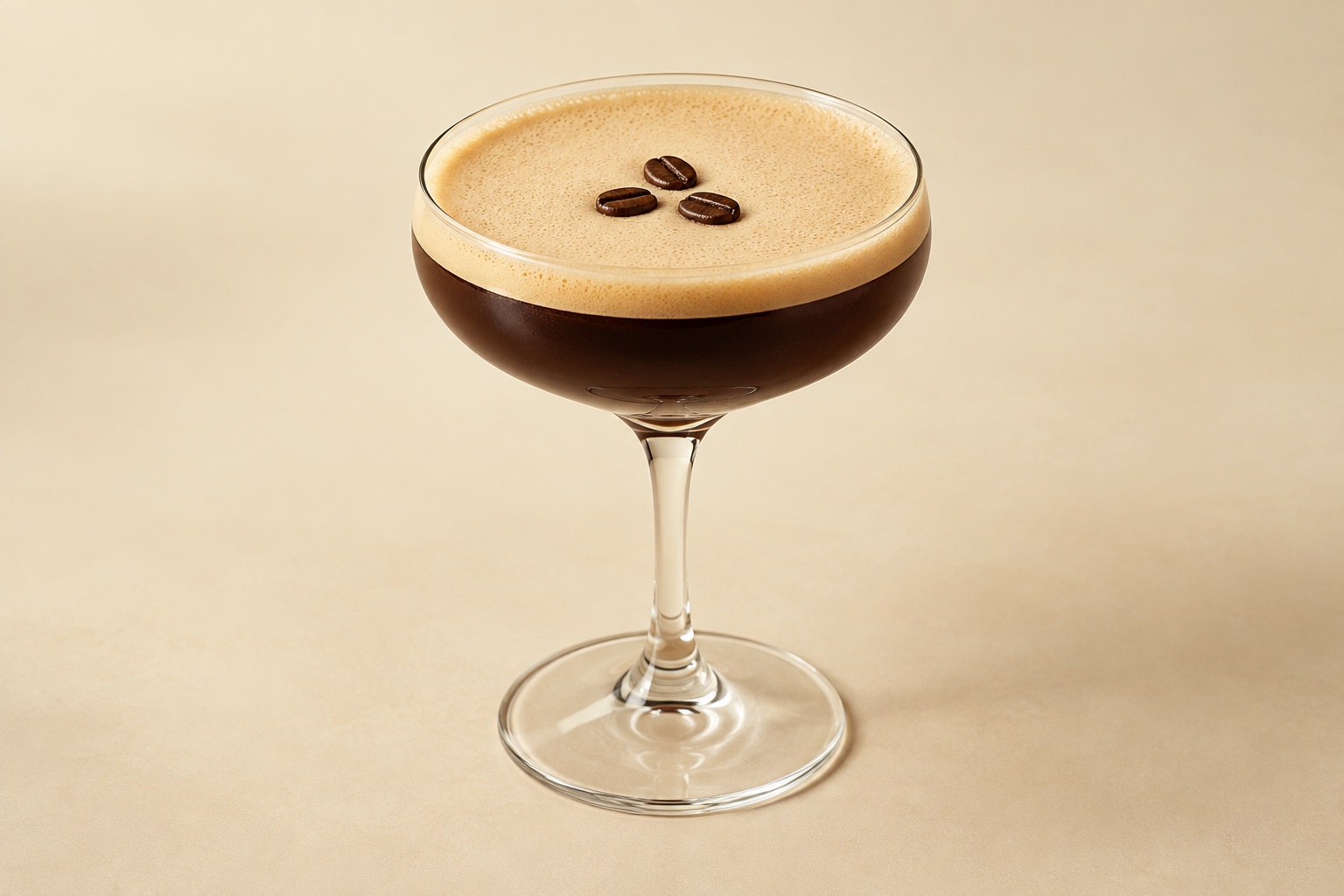
What matters here is the combination of espresso, coffee liqueur and vodka. Three main ingredients, a layer of foam and plenty of opportunities to end up with vaguely alcoholic sweet coffee. Let’s avoid that.
Dick Bradsell again
If you have read our piece on the Bramble (in French), you have already come across Dick Bradsell. The bartender created several drinks that lasted, including this one, in London in the 1980s. It was called Vodka Espresso before it became Espresso Martini.
The best-known story has a customer asking him for a drink that would wake her up and then knock her out. A memorable bar order, but there is no need to turn the customer into a famous model: accounts differ. The useful part of the story is the idea of putting good coffee at the centre of the drink.
The recipe for one drink
Preparation: 5 minutes. Equipment: espresso machine, shaker, jigger, strainer, fine strainer and a chilled coupe.
Ingredients
- 5 cl vodka
- 2 cl coffee liqueur
- 3 cl freshly pulled espresso
- 0.5 cl simple syrup, adjusted to the sweetness of the liqueur
- Ice cubes
- 3 coffee beans for garnish, optional
Method
- Chill the coupe and make the espresso.
- Pour the coffee into a small container and let it cool for a moment. It should not still be scalding when you close the shaker.
- Measure the vodka, liqueur, coffee and syrup into the shaker.
- Add plenty of ice and shake hard for about 12 to 15 seconds.
- Strain through the shaker strainer and a fine strainer into the coupe, without ice.
- If you like, place the three coffee beans on the foam. Serve immediately.
These proportions give the coffee room and keep the sugar in check. They differ from the IBA recipe, which uses more liqueur and syrup. Taste your liqueur before deciding how much extra sugar it needs.
The foam does not come from egg white
Espresso and a vigorous shake should produce the foam. There is no need to add an egg. A weak, long coffee, hardly any ice or a timid shake, however, will not help.
Freshly brewed coffee is a good starting point. That does not mean pouring it boiling hot over the ice: the ice would melt before you had control over the shake. Let the coffee cool briefly, then work promptly.
Which coffee and liqueur?
Choose a coffee you enjoy drinking on its own. A roast with chocolate or nut notes is an easy place to start. A particularly acidic espresso can work too, but it needs a different balance. Vodka will not rescue a burnt extraction.
Coffee liqueurs vary considerably. Some are very sweet; others put the coffee first. Start with the stated 0.5 cl of syrup, or leave it out if your liqueur is sweet enough already. You can use our homemade sugar syrup; here it means a simple syrup made with equal weights of water and sugar.
No espresso machine?
Strong coffee from a moka pot makes a reasonable variation. Cold brew (in French) is another option, though the flavour and foam will differ. Keep the coffee concentrated and the volume small: replacing 3 cl of espresso with a whole cup changes the drink considerably.
For a party, measure the vodka, liqueur and syrup in advance. Add the coffee and shake each drink just before serving. The foam will not wait for an hour in the fridge.