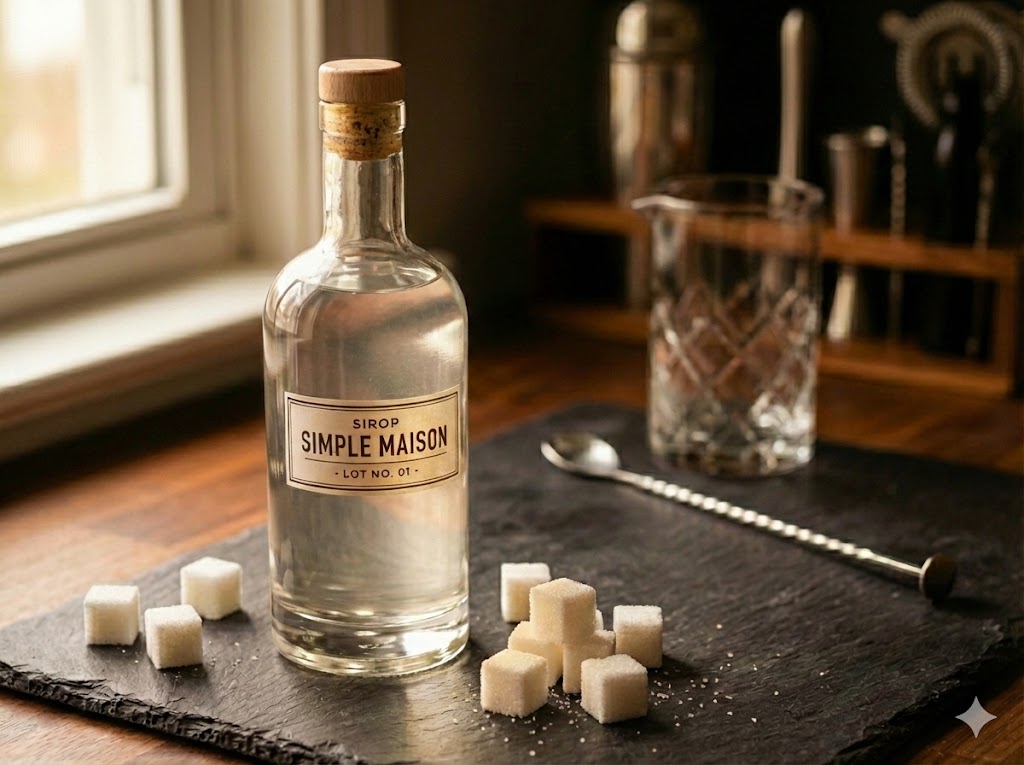
« Sugar syrup » , « cane sugar syrup » , « liquid cane sugar "or even " simple syrup " or " rich syrup for bilinguals, "Canadou" for those who know the brand, how many different products actually lie behind all these names?
Know that there is an article dedicated to red sugar syrup (in French) on the blog.
Explanations and recipes for sugar syrup
In the world of cocktails, there are essentially two products: the « simple syrup and the " rich syrup The English names are the most revealing regarding the syrup's composition. Indeed, all the products listed are made from water and cane sugar. Conversely, only the Anglo-Saxon names indicate the exact proportion of these two ingredients.
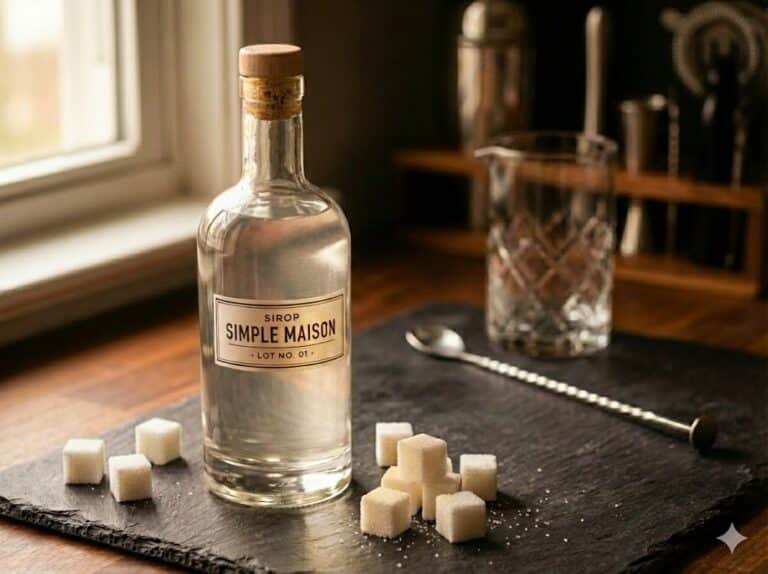
Cane sugar syrup

Ingredients
- 25 cl white granulated sugar
- 25 cl water
Instructions
- Mix the sugar and water in a container until completely dissolved.
The density of sucrose (scientific name for table sugar) being 0.9, we obtain a syrup with a concentration of 900 g/L.
Most recipes mention simple syrup. But there's a small downside to simple syrup: if you want to sweeten your cocktail a lot, you'll also have to add a lot of water. Water means dilution, and dilution means a reduction in the concentration of the other ingredients (especially alcohol!). And I know you, you're a bunch of sugarheads, you love alcohol! Especially since it's often another element that contributes the most water to the cocktail: ice.
To address this slight issue of dilution, we can use a syrup that's rich in sugar. As the name suggests, it contains more sugar.
Rich syrup
Ingredients
- 2 cups of powdered sugar
- 1 cup of water
Instructions
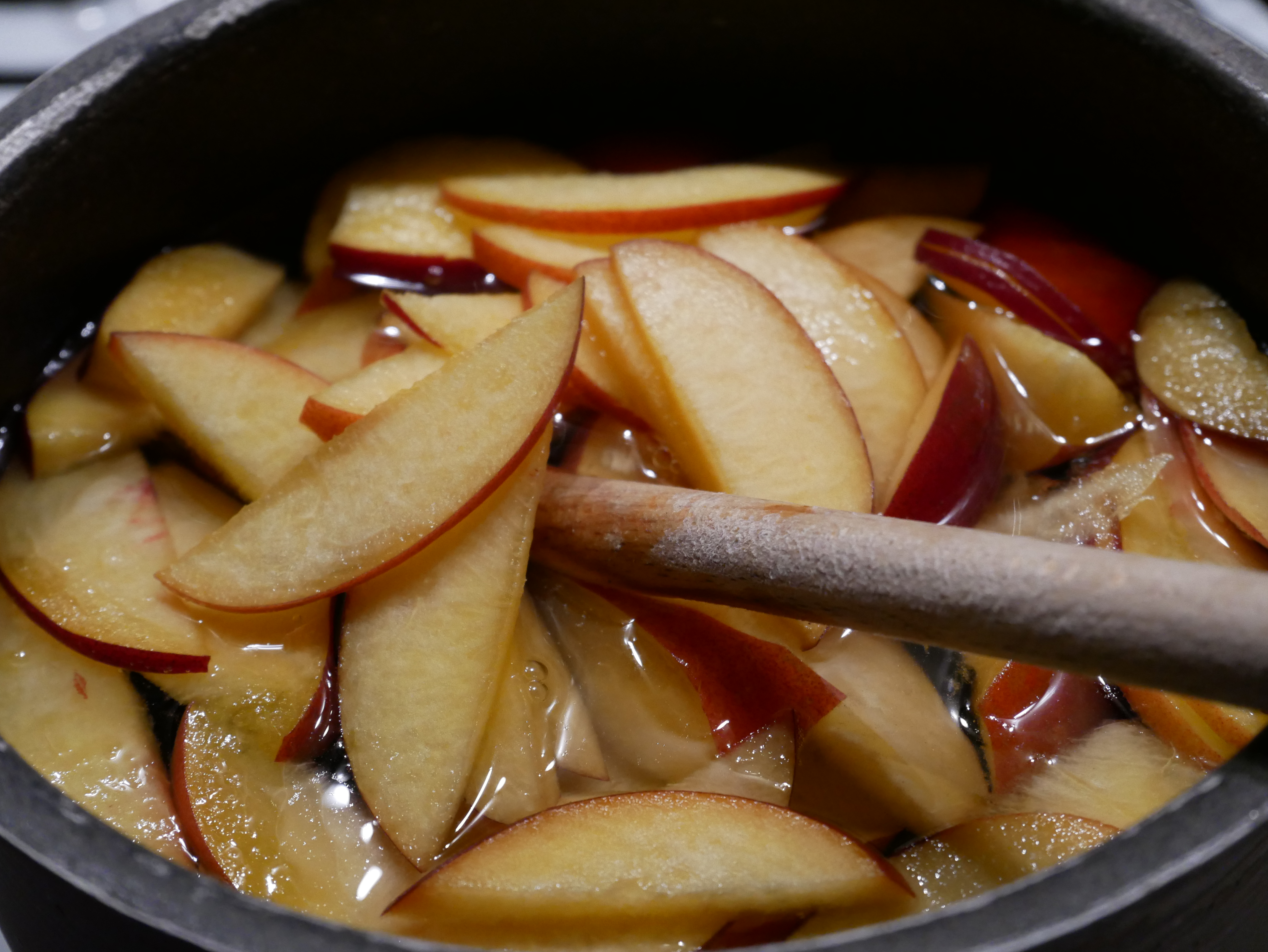
Add sugar and water to a saucepan and heat on very low flame, stirring until fully dissolved. Water must not Boil!
We obtain a syrup with a concentration of 1800 g/L.
As you can see, simple syrup is very easy to make. To make a rich syrup, start with simple syrup and upgrade it to double syrup. Rich syrup contains more sugar. When I mentioned that Anglo-Saxons came up with a much more descriptive name for these two products!
Today, there's no such thing as a 'good' or 'bad' choice between simple syrup and rich syrup: it all comes down to what the bartender is looking for in their cocktail preparation. While most recipes use simple syrup, we're now seeing more bartenders choosing rich syrup for specific recipes, giving them a higher level of precision in their drinks.
Here's a bit more insight into these two very similar ingredients, commonly used in many cocktails. Any questions?
I'm a little sneaky, and I noticed that even in the rich syrup there's water, so I dilute my cocktail accordingly.
Can I not just add granulated sugar directly into my shaker?
If possible, but this adds unnecessary complexity to your cocktail preparation. Your shaker will be very cold (if you follow our advice, you'll put a lot of ice in your shakers), and sugar dissolves less well in cold liquid. Add to that the difficulty of mixing sugar in the presence of alcohol, and you're headed down the dangerous path of sugar depositing at the bottom of your glass. These treacherous routes are only for experienced drivers who know the technical basics to avoid any mishaps. In short: little gain for a lot of effort (hence the greater use of sugar syrup).
I'm even smarter than you think, and I'm going to prepare an even richer syrup than the rich syrup—I'm going to dissolve 1 kg of sugar in 10 cl of water!
You might be a clever kid, but you left your chemistry knowledge in the wardrobe. At room temperature, only 1900 g of sugar can dissolve per liter of water—beyond that, saturation occurs. Our syrup, with a concentration of 1800 g/L, is already nearly saturated. That's why we recommend gently heating the water for better dissolution, as the saturation concentration increases with temperature. You've probably noticed that sugar dissolves very quickly in hot coffee.
Okay, I admit defeat in front of the science of this blog. Can I use a slightly different sugar, like brown sugar?
Yes, that's a great idea for more sophisticated flavors. However, be mindful of the color. Brown syrup tends to dominate all other colors. It would be a shame to ruin a bright orange or a vibrant red with brown syrup!