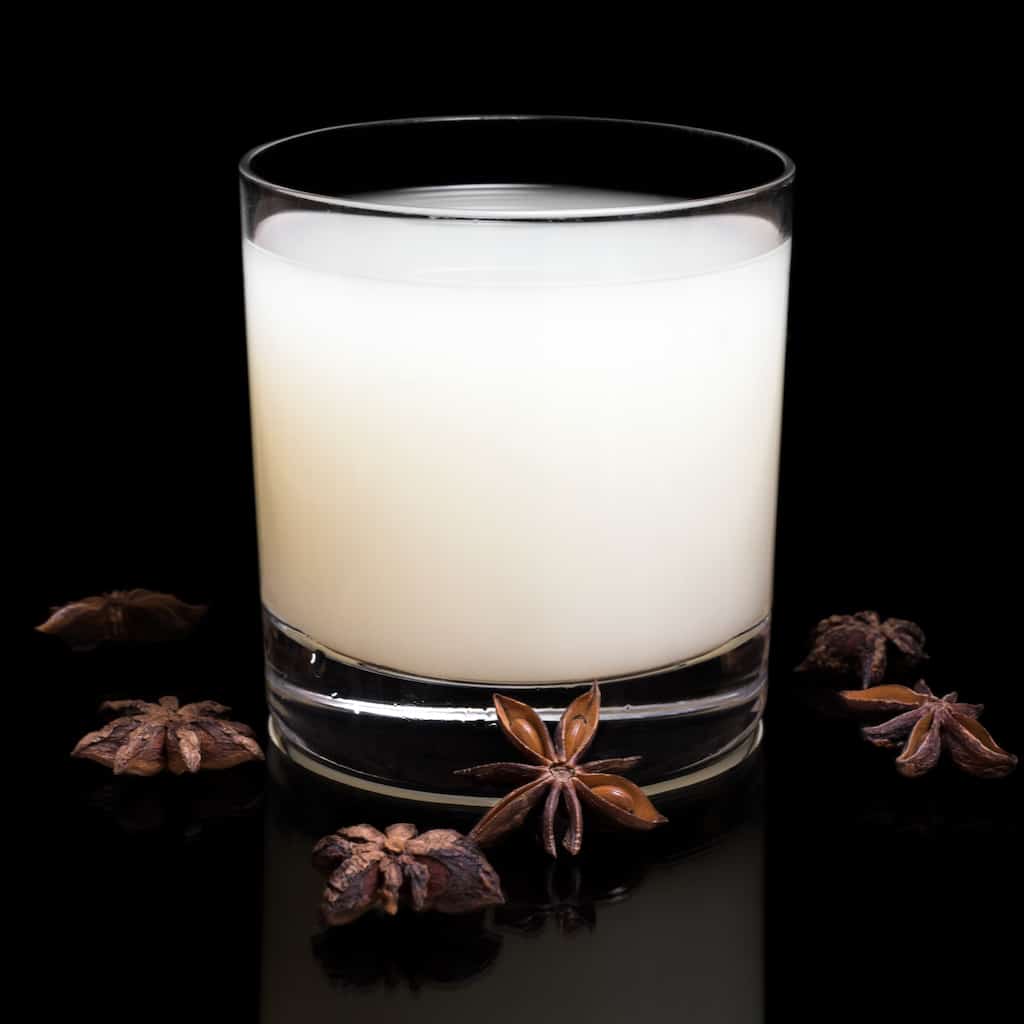

Whether made with pastis or Ricard, a Mauresque is a refreshing drink for long summer evenings, especially in the South. For me, the Mauresque is a childhood memory: summer evenings, when we'd have an aperitif, and if my father had a pastis, my mother would ask him to make a Mauresque. He didn't use any measuring tools, but he carefully poured the pastis and the orgeat syrup. It took me a while to recognize the Mauresque as a 'cocktail'—to me, it was something else.
But I've finally overcome my mixological snobbery, and I'm ready to give you the recipe for this famous cocktail, the Mauresque.
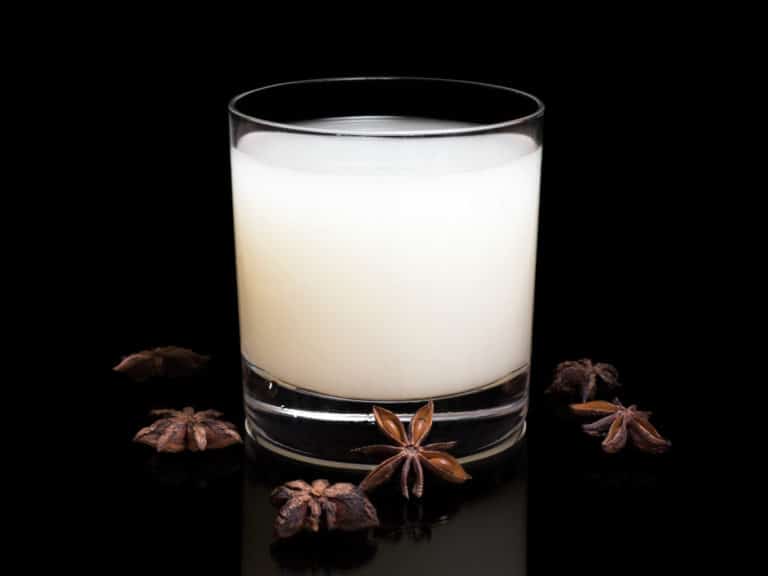
Mauresque (pastis and orgeat syrup)

Ingredients
- 12 cl water
- 2 cl Pastis
- 1 cl orgeat syrup (preferably homemade) (in French)
Instructions
- Pour in the pastis.
- Pour in the orgeat.
- Finally, add the water and ice cubes to taste.
- Add the ice cubes at the end; otherwise the syrup and pastis will not mix properly.
- Find the proportions that suit you: there are as many recipes as there are people in southern France!
Dosages: why there's no universal recipe
I know, I just gave you precise measurements, yet I immediately say there is no universal recipe. Welcome to Cocktail Molotov, where pragmatism takes precedence over consistency.
The truth is that Mauresque is like pastis: everyone measures it their own way. The pastis/water ratio varies from 1:5 to 1:7 depending on whether you're a Marseille dockworker or a Parisian tourist on vacation in Cassis. For the orgeat, it's the same.
My advice: start with a 2:1:12 ratio (pastis, orgeat, water) and adjust. Too sweet? Less orgeat. Not enough anise? More pastis. This is an aperitivo, not molecular mixology. And we know you: you might measure the first one, but after that …
And above all: the quality of the orgeat syrup makes a difference. Industrial Teisseire has nothing to do with genuine homemade orgeat syrup (in French). If you'd like to understand why, read my article on the topic — you'll be disgusted by what's inside supermarket bottles.
History of the Mauresque
Sometimes spelled Moresque, Mauresco in Provençal, it has more recently been branded EPO, for Eau, Pastis, Orgeat. This is a reference to doping product, but be aware the effects are not the same. Sorry to those who prepare it with Ricard, but water, Ricard, orgeat made ERO, and that means nothing at all!
Side note: Ricard is indeed a pastis, but some people don't count it in that category, so I respect their preferences.
Like many popular mixtures (Mojito, Caïpirinha, Ti’punch…), the origin of the Mauresque is not clear. Adding a little syrup to anise — there's more than one person who might have had the idea. It's probably because it was popular that it became a staple in bars.
However, I did do some research. Wikipedia claims (but without a source) that it originated among French soldiers who participated in the Algerian campaigns from 1830–40. At that time, it would have been prepared with absinthe rather than pastis.
I also found another source that provides a Corsican origin cocktail, and its name comes from Moorish influence in Corsica. The other explanation for the cocktail's name comes from its color: the Moorish women were always dressed in white.
Unfortunately, we'll have to settle for this. The origin of the Mauresque is probably lost in history, but that doesn't stop us from enjoying it!
The Mauresque has siblings and cousins, other cocktails blending pastis with syrup, notably Tomato, which is a mix of pastis and grenadine (in French). but also the Perroquet, made with pastis and mint.
What pastis for a Mauresque?
People often ask me this, and my answer will upset a few.
The Ricard and the 51 do the job. They're everywhere, inexpensive, and it's probably with these that your grandfather used to make his Mauresque. But if you want to go up a notch, a Henri Bardouin adds an aromatic complexity that the two giants don't possess. It's more herbaceous, more nuanced, and in a Mauresque, it really shines. The Casanis is also an excellent choice, rounder and sweeter.
If you're an adventurous type, look for a artisanal pastis: Manguin, Janot Bio, Le Petit Bleu de Marseille… The Mauresque is so simple that the quality of the pastis makes all the difference.